
The home beauty device market has experienced remarkable growth over the past few years, driven by rapid technological innovation, shifting consumer behavior, and the global demand for convenient, cost-effective skincare solutions. As we move into 2026, the industry is entering a new phase—one defined not just by growth, but by transformation.
Consumers are no longer satisfied with basic skincare tools. They are looking for smarter, more personalized, and clinically inspired solutions that deliver real, visible results at home. For brands, retailers, and distributors, understanding the key trends shaping this market is essential for staying competitive.
In this comprehensive guide, we explore the most important trends defining the home beauty device market in 2026 and what they mean for your business.
The Rapid Evolution of Home Beauty Technology
Home beauty devices have evolved from simple tools into advanced skincare systems powered by professional-grade technologies. Devices that once were limited to salons and clinics—such as radio frequency (RF), intense pulsed light (IPL), and LED therapy—are now widely available for home use.
This shift is driven by consumer demand for convenience and affordability, as well as improvements in safety and usability.
As a result, the line between professional treatments and home care continues to blur, creating new opportunities for brands to deliver high-performance solutions directly to consumers.
Trend 1: Multi-Functional Beauty Devices Are Dominating
One of the most significant trends in 2026 is the rise of multi-functional beauty devices.
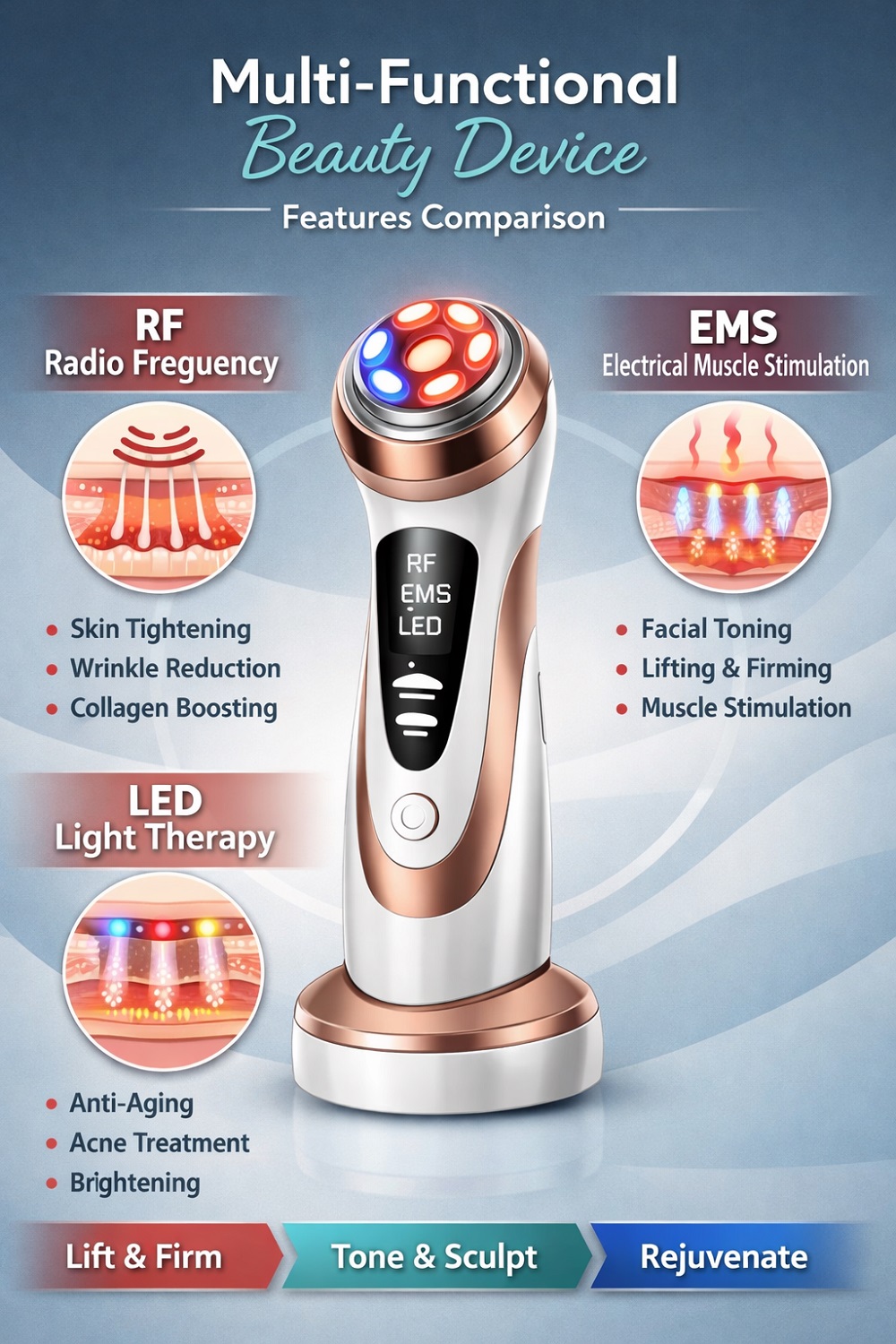
Instead of purchasing multiple single-purpose tools, consumers prefer devices that combine several technologies into one product. For example, a single device may include RF for skin tightening, EMS for muscle toning, and LED light therapy for skin rejuvenation.
This approach offers several benefits:
Greater convenience
Cost efficiency
Simplified skincare routines
For brands, multi-functional devices present a strong value proposition and allow for higher product differentiation in a crowded market.
Trend 2: Personalization and Smart Skincare Integration
Personalization is becoming a major focus in the beauty industry, and home beauty devices are no exception.
In 2026, more devices are integrating smart technologies such as:
Skin analysis sensors
AI-powered treatment recommendations
Mobile app connectivity
These features allow devices to adapt to individual skin conditions and provide customized treatment plans.
For example, a smart device may analyze moisture levels, elasticity, or skin tone and automatically adjust treatment intensity.
This level of personalization enhances user experience and improves treatment outcomes, making devices more appealing to tech-savvy consumers.
Trend 3: Increased Demand for Professional-Level Results at Home
Consumers are increasingly seeking professional-grade results without visiting clinics or salons.
This demand has led manufacturers to develop devices with stronger performance capabilities while maintaining safety for home use.
Technologies such as RF, EMS, IPL, and ultrasonic treatments are now designed to deliver visible results with consistent use.
For brands, this means emphasizing efficacy, clinical validation, and real user results in marketing strategies.
Products that can demonstrate measurable improvements in skin quality are more likely to succeed in today’s competitive market.
Trend 4: Safety, Certifications, and Regulatory Compliance
As the market expands, consumers are becoming more aware of product safety and regulatory standards.
In 2026, certifications and compliance are no longer optional—they are essential.
Devices sold in major markets must meet strict requirements such as:
CE certification in Europe
FCC compliance in the United States
RoHS environmental standards
Consumers are also paying closer attention to product safety features, such as:
Automatic shut-off systems
Skin contact sensors
Temperature control mechanisms
Brands that prioritize safety and transparency will gain stronger consumer trust and long-term loyalty.
Trend 5: Growth of Private Label and OEM/ODM Solutions
Private label manufacturing continues to gain momentum in 2026.
More brands are choosing to partner with experienced manufacturers to develop and launch beauty devices under their own brand names.
This trend is driven by several factors:
Faster time to market
Lower development costs
Access to advanced technology
Scalability
OEM and ODM solutions allow brands to focus on marketing and brand building while leveraging the technical expertise of manufacturers.
This model is particularly attractive for startups and e-commerce brands looking to enter the beauty device market quickly.
Trend 6: Sustainability and Eco-Friendly Design
Sustainability is becoming a critical factor in consumer purchasing decisions.
In 2026, more brands are incorporating eco-friendly practices into their product development, including:
Rechargeable battery systems
Energy-efficient designs
Recyclable packaging materials
Long-lasting product durability
Consumers are increasingly favoring brands that demonstrate environmental responsibility.
For manufacturers, this means designing products that minimize waste and reduce environmental impact without compromising performance.
Trend 7: Social Media and Influencer-Driven Demand
Social media continues to play a major role in shaping consumer behavior in the beauty industry.
Platforms such as TikTok, Instagram, and YouTube are driving awareness and demand for home beauty devices.
Influencers and skincare experts often demonstrate product usage, share results, and provide recommendations, influencing purchasing decisions.
Viral trends can significantly boost product visibility and sales within a short period.
Brands that invest in digital marketing and influencer partnerships can accelerate growth and reach wider audiences.
Trend 8: Expansion of Male Grooming Market
The male grooming segment is expanding rapidly and becoming an important growth area for home beauty devices.
Men are increasingly adopting skincare routines and using devices for:
Facial cleansing
Skin tightening
Hair removal
This shift presents new opportunities for brands to develop products specifically designed for male consumers.
Marketing strategies that address male skincare needs can help brands tap into this growing segment.
Trend 9: E-Commerce and Direct-to-Consumer Growth
E-commerce continues to dominate the distribution of home beauty devices.
Consumers prefer the convenience of online shopping, where they can compare products, read reviews, and access detailed information.
Direct-to-consumer (DTC) models allow brands to build stronger relationships with customers and gather valuable data on consumer behavior.
This trend also enables faster product launches and global market access.
Brands that optimize their online presence and invest in SEO strategies will have a significant competitive advantage.
Trend 10: Continuous Innovation in Beauty Technology
Innovation remains the driving force behind the home beauty device market.
Manufacturers are constantly developing new technologies and improving existing ones to enhance performance and user experience.
Emerging innovations include:
Advanced RF systems with deeper penetration
Combination therapies in a single device
Improved IPL technology for broader skin tones
Smart sensors for real-time feedback
Brands that stay ahead of technological advancements will be better positioned to capture market share.
Çözüm
The home beauty device market in 2026 is defined by innovation, personalization, and rapid growth. Consumers are demanding smarter, safer, and more effective skincare solutions that fit seamlessly into their daily routines.
Key trends such as multi-functional devices, AI-driven personalization, sustainability, and private labeling are reshaping the industry and creating new opportunities for brands.
For businesses looking to succeed in this dynamic market, staying informed about these trends is essential. By aligning product strategies with consumer expectations and technological advancements, brands can position themselves for long-term growth and success in the evolving beauty device industry.